Parts Offered
We are wholesale suppliers and exporters of :-
Herbal Amla,
Amla Powder, Amla Fruit,
Fresh and Dried Amla, Amla Extracts, Amla Seeds, Seedless Amla
Fruit Powder, Amla Seed Extracts
Certifications
Description
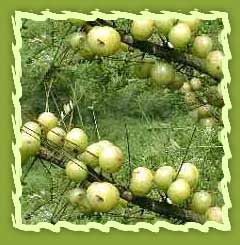
Herbal Amla is a small to medium sized deciduous tree, 8-18 m in height
with thin light grey bark exfoliating in small thin irregular flakes; leaves
simple, very many, subsessile, closely set along the branchlets, distichous,
light green having the appearance of pinnate leaves. Flowers of Herbal Amla
or Indian Gooseberry are greenish yellow, in axillary fascicles, unisexual,
males numerous on short slender pedicels, females few, subsessile, ovary
3-celled; Amla fruits globose, fleshy, pale yellow with six obscure vertical
furrows enclosing 6 trigonous seeds in 2-seeded 3 crustaceous cocci.

Chemical Constituents
The major amino acids present in herbal amla are; alanine, aspartic acid,
glutamic acid, lysine, and proline, analysis of fresh fruit pulp gave
moisture, protein, fat carbohydrates fibre, minerals, iron, niacin, and
vitamin fruit ash contains; chromium and copper.
Cosmetic Uses
Amla or Indian Gooseberry has one of the purest forms of natural Vitamin C,
20 times higher than orange juice. Herbal amla in forms of herbal powder and
amla oil nourishes the hair, thickens and darkens it. Amla fruit is said to
penetrate the scalp and strengthen hair at its root, to stop and reverse
abnormal hair loss and to promote stronger, healthier new growth. Herbal
Amla is also an excellent conditioning herb.
The Amla fruit yields an oil that has been used for centuries in Ayurvedic
medicine to treat the hair and scalp. Amla fruit is said to penetrate the
scalp and strengthen hair at its root, to stop and reverse abnormal hair
loss and to promote stronger, healthier hair growth. Amla or Indian
Gooseberry is also an excellent conditioner to use as a hot oil treatment.
Amla oil and amla powder is used in shampoos, conditioning rinses, hair
pomades and oil treatments. It can also be used in combination with
Brahmi
oil to strengthen the hair and add body. Amla powder is good in skin
disorders, Respiratory infections and Premature aging. The dried amla fruit
is detergent and is widely used as shampoo. These are so many known
applications of amla tree and its products that many companies dealing in
traditional medicines use amla fruit for preparing different formulations
for treating several diseases, as health tonic etc.
An Ancient farmula with therapeutis properties designed to penetrate hair
shaft and naurish scalp. Indian Gooseberry contains powerful, preventive,
protective and corrective qualities. Amla powder is useful in aloepecia and
corrects split ends and prevents dryness. Amla encourages blood supply to
the scalp.
Medicinal Uses
The root bark is astringent, and is useful in ulcerative stomatitis and
gastrohelcosis. The bark is useful in gonorrhoea, jaundice, diarrhoea and
myalgia. The leaves are useful in conjunctivitis, inflammation, dyspepsia,
diarrhoea and dysentery. The fruits are sour, astringent, bitter, acrid,
sweet, cooling, anodyne, ophthalmic, carminative, digestive, stomachic,
laxative, alterant, alexeteric, aphrodisiac, diuretic, antipyretic, tonic
and trichogenous. They are useful in vitiated conditions of tridosa;
diabetes, cough, asthma, bronchitis, cephalalgia, ophthalmopathy, dyspepsia,
colic, flatulence, hyperacidity, peptic ulcer, erysipelas, skin diseases,
leprosy, haematemesis, inflammations, anaemia, emaciation, hepatopathy,
jaundice, strangury, diarrhoea, dysentery, haemorrhages, leucorrhoea,
menorrhagia, cardiac disorders, intermittent fevers and greyness of hair.